25 Great Gifts for you and me from God as revealed in the New Testament book of Ephesians.
Click HERE to view The Greatest Gifts book trailer. Order at Amazon before Thanksgiving so you will receive it in time to start on December 1st. Available in paperback or Kindle.
Welcome in the name of Yeshua, Jesus our Messiah! Tonight we will celebrate Pesach (pah-SACH)… Passover. This is the celebration of the most incredible feast in the Jewish and Christian calendars. It intricately weaves a story of God’s power, faithfulness and love for mankind in both the Old and New Testaments. It was celebrated in the Ancient World, in Jesus’ time, and is still celebrated in traditional Jewish homes today.
The first Passover was not a celebration. It was a night of apprehension, fear and expectation for the beginning of a new journey for the children of Israel. The Word tells us that the Hebrews were to take the blood of a perfect lamb, and paint it on their doorposts. By following this command, the Angel of Death which moved through Egypt that night would “pass over” their homes. But since the Angel of Death did not pass over Pharaoh’s house, and his first born son was taken from him, his hardened heart was finally softened and the next morning Pharaoh let the Hebrew slaves go free. This meal that we celebrate tonight, the Seder, is symbolic of the rush to leave Egypt and the bondage it represents.
We also celebrate the significance of Yeshua’s last meal, sometimes called the “Last Supper,” a traditional Passover meal, with His disciples in the Upper Room. There is a lot of symbolism between the Old Covenant meal and the New Covenant meal. We hope you’ll enjoy learning how Yeshua tied the two meals together… and how it is applicable for us all.
Tonight, we tell a story, the Haggadah, of how the blood of a lamb saved the people of God in the Ancient times… and still saves today.
John 1:29: The next day, John the Baptizer saw Jesus coming toward him and said, “Look, the Lamb of God, who takes away the sin of the world.”
Reading: Luke 22:7-20
Let us celebrate the Passover together!
THE SEDER PLATE
Tonight we celebrate the Seder… the word Seder means “Order” and as we know, God is a God of order. The Seder is a celebration that usually takes place in homes… and at the center of the table at home is the Seder plate. It contains items that we’ll talk about tonight… unleavened bread or Matzah, bitter herbs, sweet apple mixture called the “Charoset” … parsley… a cup of salt water and a lamb bone. As we tell the story tonight, the “Haggadah,” we encourage you to take in the sights and smells, tasting each ingredient and listening to every word… to hear and see and feel the truth of God’s love for us.
LIGHTING THE YOM TOV CANDLES
Like the Sabbath meal, tonight we light the Yom Tov, or the festival candles. There are two candles on the table… the candle of Creation and a candle of Redemption. For everything that God creates, He has a plan for redemption. The whole Passover story, both the Old Testament one and the New Testament one, is a story of this plan for our redemption.
Light is a symbol of God’s presence. In Him there is no darkness. Tonight is a special night for we’ll see first-hand that Yeshua, the Light of the world, is our true redemption.
In a traditional home, the woman of the household lights the Yom Tov candles… symbolic of Miriam, you know her as Mary, who was the human that God used to physically bring His Light into the world.
And for every item we talk about tonight, there is a prayer of blessing, for the Hebrews have a prayer for everything. So my wife, Linda, will light the Yom Tov candles and I’ll say the prayer in Hebrew, the words will be on the screen for you to repeat in English.
Praised are you O Lord, our God, King of the Universe, who sanctified us through the commandments and the death and resurrection of Yeshua, our Messiah, the Light of the World and the Lamb of God, who takes away the sin of the world. Praised are you O Lord, our God, King of the Universe who commands us to light the festival lights.
SONG:
Shine, Jesus, Shine
Fill this place with the Father’s glory.
Blaze, Spirit, blaze. Set our hearts on fire.
Flow, River, flow. Flood the nations with grace and mercy.
Send forth your Word, Lord, and let there be light. (repeat).
We’re going to drink four cups of wine, or grape juice, tonight. They represent four promises God gave to Moses in Exodus 6: 6 and 7. At your table, please pour the first cup for us to drink together. And while you’re pouring, let me tell you what the four promises were:
I WILL bring you out from under the yoke of the Egyptians.
I WILL free you from being slaves.
I WILL redeem you with an outstretched arm.
I WILL take you as My own people and I WILL be your God.
The first cup is the Cup of Sanctification. In the Old Covenant, the Hebrews were saved by the blood of the lamb. In the New Covenant, we are sanctified by the blood of Yeshua. It is no surprise that our Sanctification is so important to God that celebrating it is the first thing we do together. It is the first of four cups we drink. He has redeemed us… and He has set us apart, just as He set the Hebrews apart. He continues this work of sanctifying us throughout our lives. Tonight, we celebrate our freedom from sin and the bondage it represents. Let us lift our cup together and bless the name of the Lord! And when we raise our cup, let us do so with our right hand as it symbolizes strength and the right arm reminds us of our Messiah, our strength.
Barukh Atah Adonai Eloheynu Melekh ha’olam borey pri hagafen.
ALL:
Praised are you, O Lord, our God, King of the Universe, who creates the fruit of the vine.
URECHATZ, THE WASHING OF HANDS
The Urechatz is symbolic of the purification of the priests in the temple. And for us in the New Covenant, it can symbolize baptism and the washing away of our sins.
Let us consider what Yeshua did at the Passover meal. John 13 describes how he washed His disciples feet… let me take you there… think of the dusty roads of the hills of Galilee and the desert rocky paths of Qumran. Think of the cobblestone streets in the old city of Jerusalem… Think about in the Ancient Days when the master would be gone on business for a day or several days, having traveled under the hot, sizzling Israeli sun, and coming home tired and worn out and feeling like his feet were going to fall off. And the slave, his servant, comes and meets him at the door with a towel and a basin of water to wash his feet. Oh, this is great comfort and a soothing relief. He is the master and this is his due. And the other, his servant, his slave, his property… this is his position and he belongs to the master.
Now, Jesus is so incredible! HE takes that towel and that basin of water, and HE the Master, God in the flesh, God incarnate, God with ten fingers and two legs and two arms and two eyes and two ears and a mind and a heart that feels like we do… GOD took that towel and that basin of water and HE washed the feet of His talmadim, disciples. You may recall that that night Peter was the “designated servant” — for Jesus had told him in Luke 22 to go ahead and prepare the Passover meal. Some scholars have suggested that Peter sat at the first position around the table, the servant’s seat. So, it’s easy to understand why Peter said, “NEVER! Never shall you wash my feet!” You see, because what Jesus had done is He had reversed the roles of the social norm of the Ancient Days. Incredible!
So, you are going to dip your hands in the bowl of water on your table – the larger one, it contains fresh water, the smaller one contains salt water and we’ll talk about that next. Remember the promise of David in Psalm 24: Who may ascend the hill of the Lord? Who may stand in His holy place? He who has clean hands and a pure heart… he will receive blessing from the Lord.
Praised are you O Lord, our God, King of the Universe, who sanctified us through the commandments and the death and resurrection of Yeshua, and who has commanded us to wash our hands and our hearts tonight.
KARPAS, THE PARSLEY AND THE TEARS
The Parsley is the Karpas. It is fresh and it represents life!
But life in Egypt was a life of pain for the children of Israel… suffering, tears, turmoil. Together now, we will take a sprig of parsley and dip it into the bowl of salt water, remembering that life is sometimes immersed in tears. May our gratitude for the blessings we enjoy today help to soften the pain of sorrow… and convert tears of mourning to tears of joy! Just after the Passover meal, Jesus told His disciples that they would go through a time of mourning “in just a little while” while the rest of the world would celebrate their Messiah’s death. But He also promised that their grief will turn to joy. (John 16:20). We also remember the greatest tears shed, those of Yeshua in the Garden… tears of blood… tears of submission… tears that said, “not my will, but, Father, your will be done.”
Barukh Atah Adonai Eloheynu Melekh ha’olam borey pri hagafen.
ALL:
Praised are you, O Lord, our God, King of the Universe, who creates the fruit of the earth.
YACHATZ, THE MATZAH
On the main table here, we have a stack of Matzah… unleavened bread. In the Ancient World leaven, or yeast (the ingredient that makes the bread rise) can symbolize sin. Tonight, we eat “sinless” bread.
One of the most significant traditions before Passover is for the wife to go throughout the house and remove every spec, every morsel of leaven, for the entire week of Passover the family will not eat bread that rises.
I’m going to take three pieces of Matzah… and take the middle Matzah and break it… and take the piece of broken Matzah and put it here in the cloth… This is called the Afikomen, and I’m going to hide it for dessert later. So, I need all the children to close their eyes as I hide the Afikomen. Okay?
(Hide the Afikomen and place the remaining broken piece of Matzah back in between the other two and place the stack back in front of the table host).
Can someone tell me why there are three pieces of Matzah? In the Old Covenant, they might represent Abraham, Isaac and Jacob. But why break Isaac, represented by the middle Matzah? In the New Covenant, we can suggest that three Matzah represents God the Father, God the Son, Yeshua and God the Holy Spirit. The broken Matzah, called the Lechem Oni, is the Bread of Affliction as referenced in Deuteronomy 16:3, and it can symbolize the death of Yeshua on the Cross at Calvary.
MAH NISHTANAH, THE FOUR QUESTIONS
The children of Israel were preparing to leave the land of bondage… and oh, how this night is different from all the other nights… this meal is different than any other meal.
A child asks:
On all other nights we eat bread OR matzah. On this night, why do we ONLY eat matzah?
The Answer:
Tonight we only eat the unleavened bread, because, as the children of Israel knew that they would be released from their captivity in the morning, the bread would not have time to rise. We remember their haste… and we eat the bread without yeast, without sin.
Barukh Atah Adonai Eloheynu Melekh ha’olam ha-motzi lechem min ha-aretz.
ALL:
Praised are you, oh Lord, our God, King of the Universe, who brings forth bread from the earth… the bread of life!
(Eat Matzah)
A child asks:
On all other nights we eat all kinds of vegetables. On this night, why do we ONLY eat bitter herbs?
The Answer:
Tonight we eat the Maror, the bitter herbs, so that we might taste bitterness. It reminds us how bitter it was for the Hebrews to be enslaved by Pharaoh in Egypt. The slavery to sin is just as bitter.
Praised are you, oh Lord, our God, King of the Universe, who has set us apart by His Word and commands us to eat the bitter herbs.
(Eat Bitter Herbs on a Matzah)
A child asks:
On all other nights we do not dip our vegetables even once. On this night, why do we dip twice?
The Answer:
Tonight we dip twice during the course of the meal. The first time was with the Karpas, the parsley, as we tasted the tears of bitter circumstances. Now, we will dip in the Charoset, replacing the tears with the sweetness of the hope we have in God to free us from bondage and suffering. In the same way, the Hebrews were counting on God to free them from Pharaoh. And, oh, how sweet the freedom was going to be after hundreds of years of slavery. Some have suggested that the Chorset reminds us of the mortar used in the bricks that the Hebrews made. You might ask “if that’s the case then why is it sweet?” Well, it has been said that “even the bitterest of our toils becomes sweet when we know that our redemption is near.”
(Eat Charoset on a Matzah)
A child asks:
On all other nights we eat our meals sitting at the table OR reclining on the floor. On this night, why do we ONLY recline and sit on the floor?
The Answer:
Tonight we sit on the floor and recline because in the Ancient Times this was a sign of freedom. Kings and royalty ate their meals leisurely while reclining. Slaves and servants stood. We are not rushed or hurried by what tomorrow brings as the Hebrews were on the first night of Passover. We demonstrate our sense of complete freedom by reclining during the meal.
THE SECOND CUP, THE CUP OF PLAGUES
(Refill your cup if you need to.)
When people defy the will of God, they bring pain and suffering upon themselves. God’s law provides blessing and prosperity. To deny His Law and to do evil brings destruction. When Pharaoh defied the command of God to release the Jewish people, he invited curses upon himself and his people. With the second cup we remember each of the plagues that God used against Pharaoh to bring him to the point of releasing the Hebrews from slavery and bondage.
A full cup is the symbol of complete joy. Joy in God’s mighty deliverance to His children. Joy in life through Yeshua! We are going to diminish the wine in our cups to give expression to our sorrow over the losses which each plague exacted.
We’re going to take our pinky finger and dip it into the cup for each plague and allow a drop of juice/wine to fall on our plate. Ready?
LEADER STARTS, ALL REPEAT:
Blood! Blood! Blood!
Frogs! Frogs! Frogs!
Gnats! Gnats! Gnats!
Wild Beasts! Wild Beasts! Wild Beasts!
Cattle Disease! Cattle Disease! Cattle Disease!
Boils! Boils! Boils!
Hail! Hail! Hail!
Locusts! Locusts! Locusts!
Darkness! Darkness! Darkness!
Death of the Firstborn! Death of the Firstborn! Death of the Firstborn!
DAYENU, IT WOULD HAVE BEEN ENOUGH!
Great and numerous are the kindnesses which the Lord extended to the Jewish people… And for each of his kind acts, we offer thanks and humble gratitude. Any one of these would have been sufficient to show His love for us, His compassion for His chosen people. How great God’s goodness is! We declare “Dayenu! It would have been enough!”
If the Lord had merely rescued us, but had not judged the Egyptians…
ALL: DAYENU! IT WOULD HAVE BEEN ENOUGH!
If He had only destroyed their gods, but had not parted the Red Sea…
ALL: DAYENU! IT WOULD HAVE BEEN ENOUGH!
If He had only drowned our enemies, but had not fed us with manna…
ALL: DAYENU! IT WOULD HAVE BEEN ENOUGH!
If He had only led us through the desert, but had not given us the Shabbat, the Sabbath…
ALL: DAYENU! IT WOULD HAVE BEEN ENOUGH!
If He had only given us the Torah, the Word of God, but not the land of Israel…
ALL: DAYENU! IT WOULD HAVE BEEN ENOUGH!
But, the Holy One, provided all of these blessings for our ancestors… and not only these but so many, many more!
ALL:
Praised are you O Lord, our God, King of the Universe. You are our Jehovah Jireh, our provider, for you have in your love and mercy supplied all our needs.
THE PASSOVER LAMB
Much could be said about the significance of the Passover Lamb and Yeshua, the Lamb of God who takes away the sin of the world. The lamb shank on our Seder plate represents the Lamb of that first Passover whose blood saved the Children of Israel.
Think about the smell of a lamb with all sorts of spices being roasted over an open fire. That smell is a delight to the Father. It fills His senses with delight for us, His chosen ones… His children.
Exodus 12: 8, 11-13:
That same night they are to eat the meat roasted over the fire, along with the bitter herbs and bread made without yeast. This is how you are to eat it: with your cloak tucked into your belt, your sandals on your feet and your staff in your hand. Eat it in haste; it is the Lord’s Passover. On that same night I will pass through Egypt and strike down every firstborn, both men and animals, and I will bring judgment on all the gods of Egypt. I am the Lord. The blood will be a sign for you on the houses where you are; and when I see the blood, I will pass over you. No destructive plague will touch you when I strike Egypt. (NIV)
You see, the Hebrews lived in a section of Egypt called Goshen. And for nine of the ten plagues, they were not affected, for they were geographically separated from the Egyptians. But the tenth plague would affect the entire land. So, they took the blood of the lamb, and as the text suggests, they painted the top of the doorpost, and the two side posts… effectively making a cross… to protect them from the angel of death. And like the children of Israel, when death comes to visit us, we who are Believers in Yeshua Ha’Mashiach the Lamb of God, death will pass over each one of us and we will have eternal life.
There is a red scarf on your chair for each one of you. As we now give thanks and eat our Passover meal together, we encourage you to wear this red cloth, reminding each of us of the blood of the Lamb, painted over the door of our home, and worn over the door of our hearts… and remember that the sacrifice of the Lamb of God, Yeshua, was made to spare us all from the Angel of Death… to give us Life! John 10:10 reminds us, in the very words of Yeshua: “I came so they can have real and eternal life, more and better life than they ever dreamed of.”
WE NOW EAT OUR PASSOVER MEAL TOGETHER
(Pray for the meal and provide eating instructions).
THE AFIKOMEN, THE DESSERT
Our Seder meal tonight follows God’s plan for redemption. The first two cups of wine/juice we drank before the meal speak of God’s redeeming us from Egypt and the bondage it represents, through the blood of the lamb and God’s great acts of power!
Now, after the meal, we’ll focus on the resurrection of Yeshua and His looking forward to His second coming. This Passover Seder is a rehearsal of God’s complete redemptive plan.
Now, let’s talk about the Afikomen:
The word “Afikomen” means dessert. It is the last food eaten at our meal tonight. Remember when I hid the Afikomen earlier? It is time for the children to go and find it and bring it back to me.
(Children go and find Afikomen).
To the child who brings the Afikomen: Thank you! Here’s a small reward for finding it. (Leader gives child a reward).
It is said that in a traditional Seder meal, the child who finds the Afikomen remembers what happened last year and they will barter with the father concerning a price to be paid for the Afikomen. The father then gives the child a gift in the form of a down payment as his promise to the child who found the Afikomen. And then promises to make the rest of the payment at a later time. In the Jewish tradition, this is called The Promise of the Father. In this, we understand that God paid a great price for our redemption.
Now, what does the Afikomen represent? Remember how we took the middle Matzah out and broke it and wrapped it up in the cloth? And now it has been found again! This Matzah represents Yeshua, the bread that was sent from heaven. Notice how the Matzah has stripes on it? Notice how it is has been pierced in the baking process in order to make it bake quickly? And notice the burn marks from the oven? As Isaiah 53 states: “He was pierced for our transgressions… and by His stripes we are healed.”
At the Last Supper, in Luke 22, Jesus said, “This is my body given for you. Do this in remembrance of me.” The Passover cannot be completed without the Afikomen. Nor can our redemption be complete without Yeshua, the Bread of Life, our Messiah.
Barukh Atah Adonai Eloheynu Melekh ha’olam ha-motzi lechem min ha-aretz.
ALL:
Praised are you, oh Lord, our God, King of the Universe, who brings froth bread from the earth… the bread of life!
(Eat Matzah)
THE THIRD CUP, THE CUP OF REDEMPTION
(Refill cup as necessary.)
In the Ancient Days of the Old Covenant, the first cup after the Passover meal expressed gratitude for the freedom which the Lord God granted His people.
But again, during the Last Supper in the Upper Room, Jesus did something different. You see, it was the custom in the days of Jesus’ time that when a man desired to marry a woman, he went to her father and offered him a cup of wine, “take and drink” he would propose. If the woman’s father accepted the cup, it was his way of saying “yes, you may have my daughter’s hand in marriage.”
During this last formal meal together, Jesus offers bread as His body and then He offers His talmadim, His disciples, a cup and He says, “take and drink.” It was His way of saying “I want to marry you. You are my bride. Will you accept my proposal of marriage?” And His disciples accept, on behalf of us, the Church, His bride, by taking the cup and drinking. And do you see? This is where we get communion, the Lord’s Supper. Jesus says that He won’t drink the fruit of the vine again until the Kingdom of God comes (Luke 22). That will be when the Father tells the Son that He can go get His bride, the church… us! Oh, how Jesus loves us… passionately… as a bridegroom loves his bride! He demonstrated that passion throughout His ministry, but perhaps not so intimately as when He offered this Cup of Redemption to His closest companions, His talmadim, in a quiet upper room.
The word “Pesach” which we translate “Passover” is literally translated “Protection.” Jesus, in not drinking this Cup of Redemption, forfeits God’s protection against the Angel of Death.
Barukh Atah Adonai Eloheynu Melekh ha’olam borey pri hagafen.
ALL:
Praised are you, O Lord, our God, King of the Universe, who creates the fruit of the vine.
ELIJAH THE PROPHET
There is a section of the Passover Seder that teaches us that before Messiah returns, Elijah will come (Malachi 4:5). The Messiah always has a forerunner, a preparer of the way. During the first coming of Yeshua, Jesus said in Matthew 17 that Elijah already came in the person of John the Baptist. Luke 1:17 explains that John is of the spirit and power of Elijah. And yet the Jews today don’t know that Jesus is Messiah, so they are still waiting… first for Elijah… then for Messiah.
So, in the homes of Jewish families today, at this time a young child opens the front door of the home, in effect, welcoming Elijah, and ultimately welcoming the Messiah.
Since we know that Jesus has already come, we skip this portion… But we should be reminded that Jesus will come again. And He tells us in Revelation 22: “Look, I am coming soon!”
So we say:
ALL:
Maranantha! Come Lord Jesus. Come!
THE FOURTH CUP, THE CUP OF PRAISE
(Refill your cup as necessary.)
Let us lift one more cup tonight, the Cup of Praise and let us give thanks to God… Again from Revelation 21, Jesus is not only the Passover Lamb, but He is the Tabernacle of God
I heard a loud shout from the throne saying, “Look, the home of God is now among men, and he will live with them and they will be his people; yes, God himself will be among them. He will wipe away all tears from their eyes, and there shall be no more death, nor sorrow, nor crying, nor pain. All of that has gone forever.” And the one sitting on the throne said, “See, I am making all things new!” (Revelation 21:3-5, NLT)
Let us drink the Cup of Praise together!
Barukh Atah Adonai Eloheynu Melekh ha’olam borey pri hagafen.
ALL:
Praised are you, O Lord, our God, King of the Universe, who creates the fruit of the vine.
THE HALLEL, PSALM 136
(Read entire Psalm from a Bible)
Give thanks to the Lord for He is good.
ALL:
And His love endures forever!
THE FIFTH CUP, THE CUP OF WRATH
Some Biblical scholars have suggested a fifth cup… one that only Jesus drank… the Cup of Wrath. Malachi 4 and Joel 2 describe the “great and terrible” day when the Lord comes again. As Jesus prayed in the garden, following the Passover Meal, as recorded in Matthew 26:29, He asked: “My Father, if it is possible, may this cup be taken from me. Yet not as I will, but as you will.” As we said earlier, Jesus did not drink the Cup of Redemption, the Cup of Protection… so He, by going to the Cross on our behalf, drank the cup of death. Death caused by our sin, the sins the nations. And as He drinks this Cup, only He brings salvation to the world.
He did it again! He took an ordinary moment… the whole evening… and turned it into a teaching moment for all eternity.
THE BLESSING OF AARON BY MOSES
(Numbers 6:24-26)
May the Lord bless you and keep you.
May the Lord make His face to shine on you and be gracious to you.
May the Lord turn His face toward you all the days of your life
And give you His peace.
“NEXT YEAR IN JERUSALEM!”
Lashanah haba’ah bi Yerushalayim!
DANCING!
Move the furniture out of the way and dance and celebrate the Life we have through Yeshua, the Passover Lamb!
THANK YOU
Thank you for joining us for this wonderful celebration of truth, redemption and a looking forward to our Messiah’s return.
We’d like to encourage you to take time during the coming days to read the whole story of Passover in Exodus. It is so powerful to see the compassion our Abba, Father has for His chosen people. For us! For you!
We are all called to live the Sh’ema, to love the Lord our God with all our heart, soul and might, and to love our neighbors as ourselves. Know that God desires us all to walk in relationship with him and His son, Yeshua. It’s not a “religion.” It’s communing with Him daily. Praising Him first thing in the morning and continuing to do so until you fall fast asleep each night.
The Word is true. The prophesies are true. Jesus came to fulfill the Old Testament Law not to abolish it. Isn’t it amazing how the first Passover, celebrated at least 1500 years before Jesus celebrated it with His disciples, has such meaning now that we know Yeshua IS “the Lamb of God, who takes away the sins of the world.” ?
May you be blessed in your relationship with Yeshua!
If you would like to know more about Belonging, Growing and Serving in God’s Kingdom at Oak Hills Church North Central, please contact Rich Ronald, North Central Campus Minister at richr@oakhillschurch.com.
Quiet streams of Living Water in the Wilderness of Zin in the middle of the Israeli Desert. A place of rest. A place of peace. A place of refreshing. A place of intimacy.
Do you have a “One Word” for 2014? A single, focused idea or goal for the New Year? My word is “intimacy.” As in, “I want to walk closer in intimacy with God the Father.” To do so, I think, means to be stretched in my times of prayer. My hope is that it means significant prayer. True connecting prayer. Two way conversations of prayer between God and me. Lingering prayer. Not check-list prayer.
Intimacy. A good pastor friend of mine used to say it this way: “Into me, see.” As in opening your heart and life to one who truly sees into your heart and soul. For most of us, that’s our spouse. But isn’t it also God? And I believe that His true desire is for us to see as deep into His heart as we acknowledge that He sees into ours.
That’s the deep, intimate, prayer-stretching kind of focus that I desire in my personal walk with God the Father, His Son and the Holy Spirit in 2014.
In the past ten days I have eaten up a book I literally stumbled upon at Barnes and Noble the day after Christmas. Its title grabbed me: Signs, Wonders and a Baptist Preacher, How Jesus Flipped My World Upside Down.[1] The Bible says in John 14:12 (NIV): “Very truly I tell you, whoever believes in me will do the works I have been doing, and they will do even greater things than these, because I am going to the Father.” Have you ever wrestled with these words of Jesus?
My spiritual background has included seasons of beauty in seeing God move supernaturally. It has also included seasons of awful abuse of the Biblical text and manipulating God and people seeking Him in prayer. The bad seasons soured my praying for people for years.
And yet God…
In His grace and love I’m wondering if there is a new season ahead for me personally and others in my circle of friends and family and prayer partners… a time of seeing Him move “in power” as a direct result of walking in intimacy with Abba, Father?
Curiously, it’s been a long time since a single book spoke to me the way this one has. The author’s unassuming approach is delightful. I can’t believe how much I’ve underlined, circled and starred… thoughts and ideas that have struck a chord in my heart. Perhaps they will speak to you?
Author Chad Norris talks about walking the walk that Jesus walked while He was here on earth. Can the supernatural be natural for us? Here are a few direct quotes from the first chapters:
If we had followed Jesus while He was on the earth, what would He have asked us to do? … The only answer I can come up with is that He would have asked us to do what He asked His other disciples to do, even if it led to some awkward moments that left us wondering how we ever got into such a strange situation. (p.43)
I want things that I cannot explain to happen in my life on a daily basis. I want heaven to be attracted to my life in the way it was attracted to Jesus’ life. (p.44)
I yearn to do the things my Master did while He was here. This is not because I want superpowers, this is because I want to follow Jesus. (p.45)
If you long to see more… or maybe just different and faith stretching from God, great! Let’s talk and pray and see where it leads.
I spoke about some of this in a sermon on December 29, 2013. If you want to listen to it you can find it on iTunes. Search “Rich Ronald podcasts.” Look for the sermon called “Gideon’s Power is Our Power Too.”
I’m eager to be more intimate with God the Father in 2014 and see where He guides. How about you?
The weapon of Gideon’s army was the power of light! God gets the victory with just 300 fighting men!
Have you ever seen an angel of the Lord? I have. In the midst of a season of complete disobedience by the people of Israel, an angel visited me and told me that God was with me.
With me? With my people? If that is so, then why has Jehovah let the Midianites completely ruin us?
The angel called me a “mighty soldier” and said that God would make me strong… Strong enough to defeat them?
“Right,” I sarcastically agreed. “Sir, I am Gideon,” I told him. “I am from the lowest family of the lowest tribe of all of Israel’s sons. And, quite frankly, I am considered the lowest son of the family. How will I defeat the hordes of Midian?”
It was then that I realized that I was not merely talking with an angel of the Lord, but rather, I was speaking with Jehovah directly. He assured me that He would be with me and it would be His strength that would bring about this conquest. How did I know it was God? His presence consumed my offering right before my eyes.
God then gave me my first assignment. I believe He was testing me. He told me to destroy my father’s false idols to Baal and Asherah. I was nervous, to say the least, but I did as the Lord commanded. When the villagers wanted my head the next day, I was surprised that my father came to my rescue, defending my actions. That gave me hope that if I could bring about change in my own family, maybe God was indeed with me.
And yet, I wondered… when I saw the armies of Midian and the neighboring nations gathering, I doubted, for their victory against us appeared to be guaranteed.
And yet, God had promised… so since He had tested me, I decided to test God. I laid a lamb’s fleece out on the threshing floor one night and asked God to allow it to be covered in dew, while the ground around it would remain dry. Sure enough it happened as I had asked. The next morning, I wrung out a whole bowl of water from the lambskin.
And while it was obvious that God had answered me, something in my head thought to test God again, just to be sure it wasn’t merely a coincidence. This time, I asked Him to make the fleece dry and the dust around it, wet. Again, the Lord had patience with me and did as I asked.
Surely, now I knew for certain that nothing was impossible with God.
The battle with the Lord’s army was on, and I was His newly appointed commander!
I put out the call and 32,000 troops of Israel reported for duty to defeat the Midian army. But God knew my heart. He knew that I would brag about my own strength if these men crushed our enemy. So He told me to send home any who were afraid. Two thirds of my men left me.
Again, God challenged my heart and He culled my troops down to a mere 300 fighting men.
God had a plan to ensure our success and His victory.
Later that night, I snuck into the enemy camp. I crawled passed a fire of still glowing embers and overheard one man describe a nightmare he had just had to another. The interpretation of this bad dream? I couldn’t believe my ears as the man’s tent mate said: “This can only mean one thing. Gideon is going to massacre us all!”
With renewed hope, I returned to my 300 men with a battle plan. We surrounded the thousands and thousands of Midianites. There were so many of them we couldn’t begin to count the camels, much less the foot soldiers!
It was just past midnight. I took 100 of our militia men to the outer edge of the Midian camp. There were another hundred of our soldiers on a second hill, and the final hundred on a third knoll overlooking the site. Oh, and the weapons we had with us for this battle? Trumpets and lamps. Yep, we looked more like worshippers than an army. Maybe that was God’s intent?
First, my unit blew our trumpets and broke our clay jars so the light would burst forth into the dark night. The other two units followed our lead and did the same. With trumpets blasting and lights brightly shining and coursing through the smoke of campfires we shouted “For the Lord and for Gideon!” The Midianites were thrown into complete confusion.
Panic ensued. And you wouldn’t believe what happened next. The men of Midian began killing their comrads of Amalek. And they slaughtered each other from one end of the camp to the other while we watched and cheered from the distance. It was pandemonium.
We didn’t do anything really. God did it all. A few hundred men defeated an army of thousands. He was surely with us.
In the days that followed, the generals and leaders and kings were chased down and killed one by one. The Midianites have never recovered. Our land is at peace.
And the men of Israel wanted me to be their king.
No, I could never be their king, nor would my son. The Lord, Jehovah, is our King!
This is the first-person story of Gideon from Judges 6, 7 and 8. It’s applicable as we approach 2014. Are you willing to let God use you in an extraordinary way? To use tools of worship, like trumpets and lights, to defeat the enemy?
Paul says in Romans 8:2 that “the power of the life-giving Spirit has freed us from the vicious circle of sin and death.”
That was the same circle of the children of Israel. They drew close to God, then they began to sin and worship other gods, then they would repent and draw close to God again. In Gideon’s story, it was only when Gideon first destroyed his father’s man-made gods of Baal and Asherah, that began the process at that time of God delivering His people from the Midianites.
And I believe that is what the Holy Spirit helps us do today… He comes along side of us to comfort us, to give us boldness to share the hope of the Gospel message and He helps us destroy the idols of the world that are in our life. And in doing so, it draws us back to Jesus. So let me ask you, what idols do you need help destroying as you enter a New Year?
Just like Gideon routing the thousands of Midianites with just a few soldiers, God will bring tremendous victory to you as well. A victory for you that will bring glory to Him!
Jesus is my brother and my friend. (photo from the movie “The Gospel According to Matthew” with Bruce Marchiano as Jesus, distributed by the Visual Bible, 1993).
Throughout Advent, let’s look at the people of the story of Christ’s birth. Today: James, the brother of Jesus. Here is my take on a possible first person narrative from Matthew 1, Luke 2 and the book of James.
I’ll never forget the story my Mom and Dad used to tell about that night. I wasn’t there. I’m the little brother. So, I have to rely on the memory of others.
My name is Jacob. You know me as James, the brother of Jesus. I called him Yeshua.
Our Dad’s name is also Jacob. But you know him as Joseph. Oh, the stories he would tell about those days. And Mom? Well, as any woman in her final weeks of pregnancy she was, according to Abba, “cranky.” Every little thing was a big thing. “Do you have to hammer so loudly?” she would ask. Dad’s hammering was always the same volume.
It was late in the day when Dad heard the news. Laws are laws. Caesar commanded that everyone return to their hometown to be counted in a census. Since our family is of the Tribe of David, that meant a four day journey to the City of David. A four day trip? With Mom in her condition? My Dad was such a gentleman, but how was he going to do this? Such an excursion with such a pregnant wife! He says he found a couple of extra blankets to put on the back of the donkey. Mom was the adventurous type, but I’m pretty sure this was just one journey she didn’t enjoy. Dad’s plan was to keep a positive outlook saying that they could make the trip as quickly as possible, register for the census and get back to Nazareth in time for the baby to be born… in time for my brother to be born.
Mom says she was very quiet sitting up on the donkey for most of the trip. Dad says he kept thinking about the son inside of Mom, and our family and our family’s future, and what the angel had said in two different conversations to both Mom and Dad.
Then it happened! All of sudden everything changed. Mom started talking and chattering in quick words and phrases. The energy level changed and there was a rush of anticipation. It was time! Can you see them? Not now! Not on the road! Not on a donkey! This is not at all what my Dad had planned!
They got to the town of Bethlehem and there were people everywhere. Not the usual empty, sleepy village. It was night, close to midnight and Mom was holding on to her belly. Dad told Yeshua and me years later that the sounds coming from her mouth rivaled the noise of that old donkey. She needed a place, a bed, a clean room. The baby would be born that night.
So, with great fear Dad tied the mule up by a tree and sat our Mom down on the blankets by the side of the road and he ran off to find an appropriate place. No one would help him out. Everyone was interested, but not a single person would offer assistance.
So he went back to where he had left Mom and the donkey. He helped her back up onto the mule and they began wandering through the tangled streets and alleys of Bethlehem together. Not sure how it happened, but the animal led them to a cave. It was smelly. Wet. Dark. Dank. Not even a nice place for animals. My gracious Mom assured Dad that it would be fine. Dad felt terrible. This is not at all what he had planned. He would tell us years later, “I’m the carpenter, the one who makes solutions, not problems. I earn a living fixing things!” He truly felt like he had let both Mom and my soon-to-be-born big brother down.
Dad laughs about it now, but, the next thing he realized, he was the midwife. Dear Mom led Dad to a place where most husbands never venture. Together they heard the first cries as the baby was born… as Yeshua was born! Dad used his knife and cut the cord and handed the baby up to Mom.
Amazing!
Dad still says that as he watched Mom and Yeshua together, by the light of a single candle, surrounded by animals, that that moment was the most special moment of his life… the moment when his dear bride was the most beautiful.
Mom and Dad had other children after that night. I came along a few years later.
And yes, Yeshua is a special brother to me. While it took me a few years to understand the supernatural part of him — that he is God’s son — he is still my brother.
We grew up together. We played games together. We fished in the Sea together. We helped Dad make furniture as he taught us how to build walls and homes with our hands. I always enjoyed conversation around a meal or a fire with Yeshua. He had a great sense of humor.
He was about as real a friend and brother as you can find.
As a big brother, he was always looking out for me. He was an incredible teacher. He taught me how to find peace in the midst of trials and that Godly wisdom means more than street smarts. He taught me about temptation and how to stay right and strong and pure. He encouraged me to put my faith into action. He cautioned me often about the words I speak, for my tongue seems to get me in trouble regularly. He told me to look for the best in others. And to be willing to admit my faults. And to pray for, and with, each other.
I saw some pretty incredible miracles walking along side Yeshua.
But mostly, I saw the greatest kind of love a brother can offer… unconditional and everlasting love.
Our mutual friend John said it best about him: Greater love has no one than this, than he who lays down his life for his brother.
“I am the Lord’s servant,” she said. “And I am willing to do whatever He wants. May everything you said come true.” (Image from Zondervan.)
Throughout Advent, let’s look at the people of the story of Christ’s birth. This week: Gabriel. Here is my take on a possible first person narrative from Luke 1.
I love my work. I truly do. I am a messenger who brings Good News to people. I am God’s mouthpiece. Yes, I stand in the presence of God Himself. He speaks to me. He gives me messages to deliver. Many years ago I spoke to Daniel and explained a dream to the prophet. Interesting that the vision he had then ties directly to our time now.
Just a few months ago the Almighty sent me to Elizabeth’s husband, Zacharias. That was an interesting exchange. Here’s this man, a priest, holy in actions and respected by both God and man… He is ministering in the inner part of the sanctuary… I appear from the altar of incense. He was a bit frightened but I brought a message of incredible news, good news:
“Don’t be afraid, Zacharias!” I told him. “For I have come to tell you that God has heard your prayer, and your wife, Elizabeth, will bear you a son! And you are to name him John.”
God told me to let Zacharias know that both he and Elizabeth would be filled great joy and gladness at this son’s birth, and many will rejoice with them. Both Zacharias and his wife were old, but this son would be one of the Lord’s great men. I told him that this baby would be filled with the Holy Spirit, even from before his birth!
Can you see him? He stood there next to the Ark of the Covenant and just stared at me. I continued to speak of the encouraging future God had for this son. “He will persuade many a Jew to turn to the Lord his God,” I told him. “And he will be a man of rugged spirit and power like Elijah, the prophet of old; and he will precede the coming of the Messiah, preparing the people for his arrival. He will soften adult hearts to become like little children’s, and will change disobedient minds to the wisdom of faith.”
Such news, eh? Who wouldn’t welcome this great plan from God Almighty? And yet this man, Zacharias, didn’t believe it! He didn’t believe me. Clearly just my presence with him in the Holy of Holies was miraculous. But he stammered on about how old he was… and his wife…
Didn’t he recall the stories of Abraham and Sarah? Or Elkanah and Hannah. Or Isaac and Rebekah? No, I guess not. But hadn’t he been praying for a son? Yet he doubted. I just couldn’t believe that he didn’t believe. You could say the hair on the back of my neck stood up.
So, do you know what I said next? i raise my voice. “I am Gabriel! I stand in the very presence of God. It was He who sent me to you with this good news! And now, because you haven’t believed me, you are to be stricken silent, unable to speak until the child is born. For my words will certainly come true at the proper time.”
You know, sometimes you have to take some pretty radical steps to get some people’s attention.
Ah, but not Mary. Not Mary.
Every time the Almighty has sent me to speak directly to His children I have to say “Don’t be afraid!” right at the start. Every time . Except one. Miriam. You know her as Mary. She wasn’t like Zacharias. She wasn’t like Daniel. Such a sweet girl. Such love for God she has. Yes, she was a little confused at my message, and I had to explain a few things to the young woman, but she believed it… because she believed God.
You haven’t heard the message? Oh my, well, I’m sure she wouldn’t mind my repeating it for you. Here’s what I said:
“God has decided to wonderfully bless you, Miriam! Very soon now, you will become pregnant and have a baby boy, and you are to name him ‘Jesus.’ He shall be very great and shall be called the Son of God. And the Lord God shall give him the throne of his ancestor David.And he shall reign over Israel forever; his Kingdom shall never end!”
Here’s the confusing part. She asked how this was going to be, because she and her fiance’ Jacob, you know him as Joseph, had rightfully never been together. “How can I have a baby?” She asked me. “I am a virgin.”
This is the part I had to explain… and even I didn’t understand the message the Almighty had given me to give to her. I told her, “The Holy Spirit will come upon you, and the power of God shall overshadow you.”
Listen to this… this is what is so amazing about Jehovah. God’s plan was this way so the baby born to sweet Miriam, Mary, would be completely holy, the Son of God.
I then mentioned that her Cousin Elizabeth was with child and I assured her that “every promise from God shall surely come true.”
And here’s the best part of the whole mission: her response. I had just told her some pretty remarkable news… in fact, impossible news. More impossible than the news I had delivered to Zacharias, really. And what was her reply? Oh, this delightful child is wise beyond her years. “I am the Lord’s servant,” she said. “And I am willing to do whatever He wants. May everything you said come true.”
May everything be as I had said! Her world was about to be totally flipped upside down. And she was ready and willing! Can you believe that? How old was this girl? 14-15? What trust! What obedience!
She was willing to say “Be born in me!” Despite the mystery of how God was going to be a baby… or how the One who birthed the stars in the sky was allowing himself to now be birthed by this young girl.
She trusts that God knows what He’s doing. His invitation is for everyone. He will soon be here! His invitation isn’t just for Miriam. It’s for all of you. It’s His great love, reaching down to save the world.
Throughout Advent, let’s look at the people of the story of Christ’s birth. This week: a shepherd. Here is my take on a possible first person narrative from Luke 2.
It was just another night, really. Nothing too special about it. The sheep were grazing or sleeping on the rolling meadow, just north of Bethlehem. The air was cool, but not cold yet, so we let the animals continue to stay out in the fields rather than finding a cave for shelter.
My name? It’s not really important, for I am a lowly shepherd. There are none in all of Israel that think of our people as anyone special. We do not command much attention and merely go about our work in a quiet, nondescript manner. We feed the sheep and goats. We water the sheep and goats. We guard the sheep and goats. We move them about so they will find plenty to eat and just the right amount to drink. And this we do day in and day out.
Shepherding is the only job I have ever had. I know my sheep, and they know me. As of today, I have 109 sheep in my flock: 32 rams, 41 ewes, and 36 lambs. There are another 88 goats. Everything I own is in a pack on my donkey. It’s not much. Another tunic. Some candles and pottery. A few ropes and animal skins. A small bag of nuts and raisins. Oh, and my flute. I so enjoy the gift God has given me to play music. It is a joy to worship the God of Abraham, Isaac and Jacob all while simply blowing across hole in a hollowed out piece of wood. I think the sheep like it as well.
My brother has his flock just over there. My brother-in-law is along that ridge.
So, about “that” night… The air was crisp. The moon was full. The sky bursting with bright stars. We had just thrown another log on a small fire. We kept watch for coyotes, for this is the time of the year when they prey on the members of our flock. We were talking about heading back to our village and meeting up with our families as it was the season to go up to Jerusalem to celebrate the Feast. Of course, we do not ever get to go to the Temple, for we must be out here. But some in our family are blessed to be able to make the short journey to Mt. Zion.
We were making our plans when suddenly the night sky became very bright, as if it was the middle of the day. The sheep were startled and began to cry and low and move about anxiously. The three of us, did our best to keep them calm, all the while our hearts raced frantically. We had never seen this happen before. We had heard of earthquakes but had not experienced one. Was this that? Or some other natural phenomenon? Was this some sort of army moving across the plains? The dogs were barking, the sheep bleating, the donkey braying. We were terribly frightened.
Through the bright light a man appeared… a man like we had not ever seen previously. His first words? “Do not be afraid!” And yet we were terrified! It was truly a challenge to slow our heart rate and calm our breathing.
And then he said he was a messenger bringing good news, joyful news. Our Savior was born this very night and we were to go quickly down to the village of Bethlehem and see this new baby. A baby? Our Messiah? What was he saying? Who was this man? While he didn’t tell us he was an angel, we quickly figured that out when a multitude of others joined him and they started singing. Singing! And proclaiming the birth of a Savior.
“Glory to God!” they sang. “Peace on earth!” echoed across the valley, amplified by the night air.
Who were we to hear this message? We are not priests or rabbis or Pharisees or King Herod. Maybe they should go and proclaim this news to people of stature?
And just as quickly as they appeared, they returned again into the heavens.
So, of course, we did what they told us to do. We gathered our things; rounded up the flocks. And we ventured across the meadow in the middle of the night, down the rocky path to the village of Bethlehem. We looked and searched all over town. Can you see us? With our sheep? And our goats? And our donkeys? And the shepherding dogs? Oh, what noise we made as we meandered through the village in the middle of the night.
A man named Jacob came to greet us. He asked what we were doing wandering around? We told him of the angels and the singing and the bright lights in the sky. We shared the message of good news they had shared with us. He was stunned and had this look on his face I’ll never forget. It was a look of disbelief and belief all at the same time… like something very real and very special just dawned on him. With an eager jump in his step he led us to a small, dark, dank cave. He apologized as he motioned for us to enter. Inside were a few animals and a woman, who he said was his wife, lying in some straw. Her face was illuminated by a single candle. And she nursed a new born baby.
“Miriam!” he whispered with enthusiasm. “These men… they saw angels who told them to come find us… to find him… our son.”
We looked at each other with doubt in our eyes. Is this our Messiah? Our king? The savior of the world? But wouldn’t he be born in a royal palace attended to by a multitude of nurses and midwives and servants? Wouldn’t he be wrapped in silk or fine linens, not these swaddling rags?
Jacob could read our thoughts as our faces betrayed our skepticism. “He was born in this simple cave,” he said with humble honesty, “because he was born for you.”
“But we are lowly shepherds,” we explained. “And he is a king?”
“Yes,” Jacob replied. “Yes, indeed. He has been born for you and for them. You, however, you are the first to see Him. His name is ‘Immanuel. God with us.’ Go! Go tell everyone you see what a great thing God has done for all of us.”
And so, we did. Our suspicions turned to great joy. We returned to the fields and we praised the God of our Fathers … for the angels, for Jacob, for Miriam, but mostly for this baby, our Savior, born this very night!
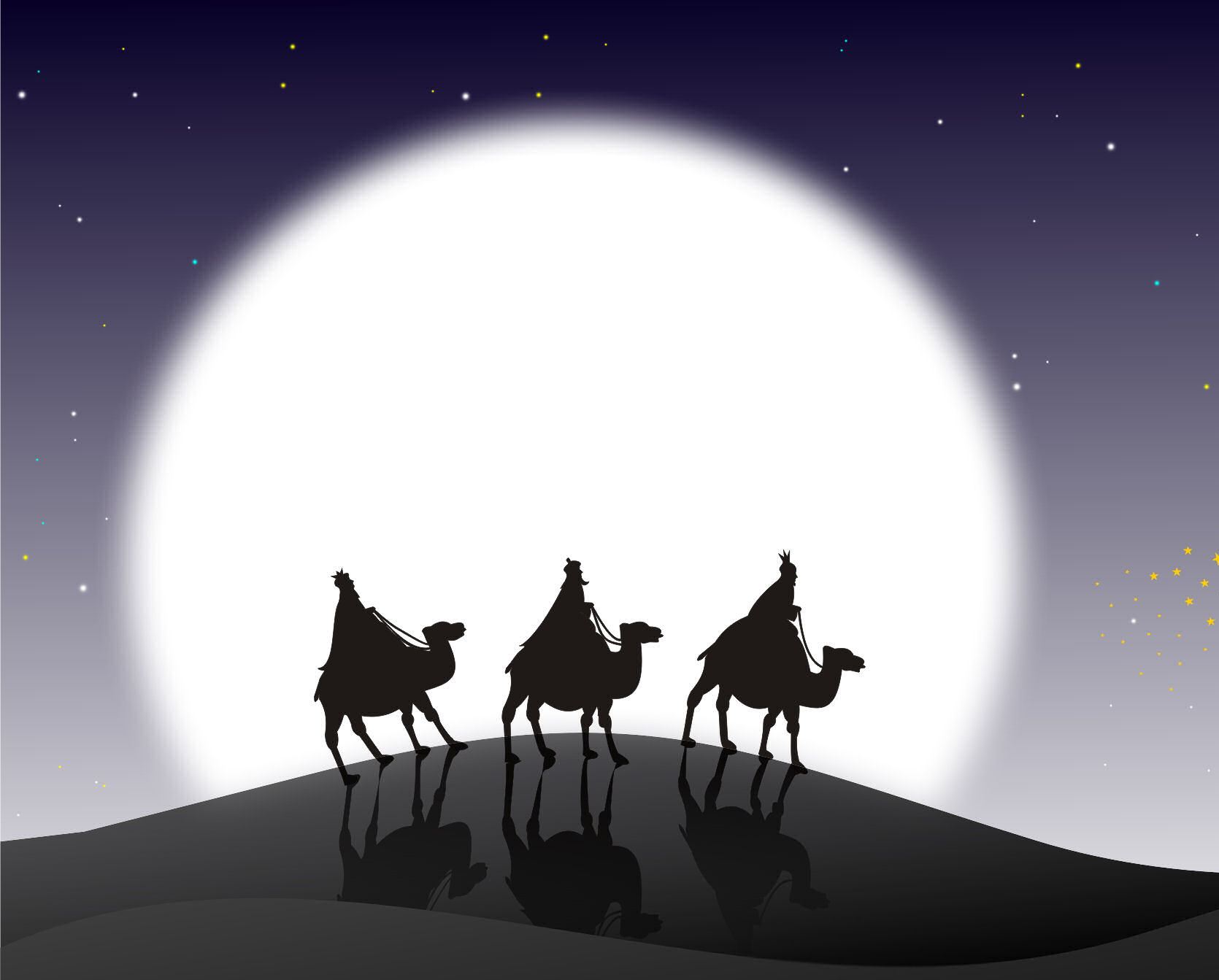
The Wise Men seek the King. When they found Him they were changed forever. How about you?
Throughout Advent, let’s look at the people of the story of Christ’s birth. This week: a Wise Man. Here is my take on a possible first person narrative from Matthew 2.
We have just left the place where I, personally, experienced the most significant event in my life! We saw Him, the infant, the child, the true King of Israel. And we gave Him gifts. And we worshipped Him. And we are changed forever.
Let me back up for a minute. My name is Gushnavadar. I am a Magi of the east, from Babylon in Persia. I have two companions with me, one is twenty years my senior, the other is twenty years my junior. They call us “wise men,” and I guess, we are just that, but we are not kings.
Our people go back to the prophet Daniel, who was one of our own. He prophesied about a Messiah. Although Daniel was a Hebrew, we are Gentiles. But we love the same God as the people of Israel. He has given us this unique gift of interpreting dreams. Some also call us astrologers, for we study the stars in the sky. But we do so with a specific purpose and anointing, as we believe they point to what God is doing now and in the future.
Recently, something strange occurred in the night sky… three stars lined up and pointed right to the city of Jerusalem in Palestine. And what was significant about these stars is they were of the constellation Aries, the Ram. Three stars, from a ram, pointing to the city of David?
Ever since King Nebuchadnezzar took the people of Judah into captivity in our home country, we have known of the stories of God’s deliverance of His people. One oft-told account recalls a ram, stuck in a thicket, that God provided as a sacrifice. It was on Mount Moriah there in what is now Jerusalem. The intended sacrifice was Abraham’s son, Isaac. But God had another plan. And we have heard that one day God will deliver all of Abraham’s children, both Jews and Gentiles, by way of a ram, or a lamb.
So, the stars pointed to Jerusalem and the three of us Magi, along with a cavalry of slaves and servants, ventured out to seek the meaning of the stars. You should know that some have called us Magi “king makers” for no king in all of the Orient became royalty without the blessing of our little fraternity. And if the stars were calling out that a new king had arrived, it was our job to sanction his monarchy. Yes, we knew Herod was the “king of the Jews” in Palestine, but that was a title merely bestowed on him by Caesar Augustus so he would have some clout in collecting taxes.
We arrived in Jerusalem several months, and over a thousand miles, after our departure from the East. When Herod heard we were in town looking for a new king he was shaken and irritated. Was his make-shift reign coming to an end? He called for a meeting with us immediately. We told him of the prophesy and the stars. He was familiar with the Ancient Word, but had no knowledge of the night sky pointing us here at this time. He suggested we search the neighboring town of Bethlehem, for his advisors recalled the Biblical text of Micah that says “You, oh Bethlehem, will be the birthplace of my King, who is alive from everlasting ages past…” (Micah 5:2, Living Bible) He told us to return to Jerusalem and let him know if we found this new king so that he might worship the king as well.
Along the way, again we sought the night sky for direction. Another star appeared, and its travel actually stopped and reversed and stopped again… right over a simple peasant home in Bethlehem.
We approached cautiously. A carpenter appeared in the doorway, amazed at our large caravan. Could this be the man we were seeking? He assured us, no, he was but a simple man. However, his son… his son…
The three of us entered the home and immediately we knew. We just knew. His mother was radiant. The child, now some six months old, sat up in her lap. He was not the King we expected, but He was most certainly the King that the God of the Hebrews had anointed. We were instantly humbled in His presence. We offered Him gifts we had brought, although honestly they seemed insignificant… the gold, the frankincense and myrrh. And we bowed before Him, no we fell before Him and worshipped… worshipped… worshipped….
We stayed as long we could. Our lives and hearts changed forever. Transformed really.
We are heading back to Persia, by a different way. God has told us in a dream that we must protect the new King and not tell Herod. Not really sure what we will do once we get home. I know we cannot merely go back and live the life we had been living. No, it will be different now. We sought out the new King, and we found Him! We found Him!
And we will tell the people of Judah living in our land that they, too, must seek out and find their new King! And if they let Him into their life, they will be completely transformed as well.
The Old Man by Annu from trekearth.com. Simeon perhaps? God promised that he would see Messiah before he died. And he did!
Throughout Advent, let’s look at the people of the story of Christ’s birth. This week: Simeon. Here is my take on a possible first person narrative from Luke 2.
I have tried to live a devout life. My parents were good Jews. They brought me up in the traditions of the Temple. We lived along the Coast of the Great Sea. Three times each year, my parents brought the whole family to Jerusalem to celebrate the Feasts.
I married and had my own family and repeated the same traditions. We also came up to Jerusalem three times each year. We celebrated Pesach, the Passover, in the Spring… Shavuot, Pentecost, in the summer… and Yom Kippur and Sukkoth each fall. These are special times for all of Israel, but especially for us devout Jews. It’s a time to remember how Jehovah delivered His people from the bondage of Egypt, how He gave us His Law and how He cared for us during our wanderings, before we entered the Promised Land.
Since my wife died I’ve decided just to stay here in Jerusalem. It’s easier on this old body of mine. I spend my days near the Temple. God is present in my life every moment. I pray. I sing. I do odd jobs for the priests. I pray for people who come by. I enjoy Jehovah’s presence in my life. I can sense His Spirit. It is real. He has blessed me more than I’ll ever begin to be able to tell you.
But there was this one time, it was about 25 years ago… during the Feast of Tabernacles when we all come up to remember the roamings of our ancestors through the dessert… we set up small tents called Sukkah’s to live in for the week. And we gather for a festive time of remembering. It was during the worship celebration at the Temple; the high priest had just returned back from the Kidron Brook with a vessel of water from Siloam’s Pool to pour out on the altar. In the frenzy of the crowd shouting “Hosanna!” I heard the voice of Jehovah. He spoke to me as I am I speaking to you now. All the noise of the crowd went silent And He said: “Simeon. You will not die before you see my Chosen One, the Messiah, in Whom I will deliver all of Israel. From Him will come streams of Living Water, not just a pitcher of water. And He will be poured out for the redemption of all of Israel.” In the midst of this great worship service, I was stunned! Living water? Poured out? The Messiah? Yes, we know He will come some day. But in my lifetime? How wonderful that day will be! Will it be as Joel has promised? Will the prophesies come true? Will Elijah truly come again before Messiah?
I am an old man now and I have dreamed dreams of His coming again. I’ve spent the rest of my life watching, waiting, wondering… who could it be? I look deep into the eyes of every man who passes by. Will he be like Moses or more like Joshua? He must be a young adult, at least, and Jehovah is shaping Him into our powerful King and Messiah. Every time I see Herod speak before the crowds I look around and ask myself: could he be a Jewish officer in Herod’s castle waiting to be revealed? What mighty legion of soldiers does he lead? Or maybe he is a governor, or a synagogue ruler by this point in his life?
Some have said he will come from the Galilee. Ha! There’s nothing but farmers and fishermen up there!
Whoever he is, I know I will recognize him in the blink of an eye. He will be as strong as David when he routed the Philistines! He will be as wise as David’s son Solomon. He will rule our people with power in one hand and grace and love in the other. He will deliver us from the oppressors, be it Rome or Egypt, once and for all. Isaiah says he will come to heal the brokenhearted. And those who mourn in Zion? They will rejoice!
Ah, look. There is a peasant couple with a young baby. They always want a blessing, these new parents. I must go into the Temple. Funny, the priest is quite capable. But he always asks me. “Simeon. Come bless this new child,” he says. “They rather have the old man bless the child than the priest.”
So, I will go. And I will keep looking.
I wonder if they are of the tribe of Judah? Maybe the father is someone special?
Jesus, in the Garden, prays for you and me, asking that we may live in unity. (John 17:21-23)
I have a friend who is a gym teacher at an all boys elementary school. He loves to tell a great story about watching kids line up for gym class. You can see them, can’t you? All dressed identical in little navy gym shorts and grey t-shirts. Timmy pokes Jason in the side. Jason pokes him back. Timmy slaps Jason. Jason slaps him back. Soon, it escalates to shoving, and before you know it, one of them is on the ground looking up at the gym lights and rafters.
Sometimes, it is that way with grown-ups too, isn’t it? At work. In your family. Even at church. Mr. Smith says something to Mr. Franklin that just happens to push Mr. Franklin’s buttons. Before you know it, Mr. Smith is offended. At Men’s Bible study coffee the next morning, Mr. Smith is telling Mr. Thompson about how horrible a man Mr. Franklin is. Mr. Thompson sees Mr. Franklin the next Sunday morning and decides not to talk with him any longer. Mrs. Franklin then sees Mrs. Smith at the Ladies Bible Study on Tuesday and gives her an earful and Mrs. Thompson stands off to the side and can’t imagine why her two dear friends are terribly miffed at each other.
Miscommunication. Being misunderstood. A short email not intended to be mean-spirited turns into hurt feelings and an offended heart. Holding grudges then turns into bitterness. And it can be like a malignant cancer that spreads not only through one person, but among a whole group of people. And things get ugly.
And every one of us is susceptible to ugliness, because every one of us is human… and we are sinners. Relational conflict is a part of a normal life. Solomon suggested it is healthy as it sharpens us. Ugliness and slander and gossip, however, are sin.
The Bible is full of great counsel on how to handle relating to one another.
If you look at the Ten Commandments, they are all about relating. The first four outline our relationship to God; the other six provide rules for our relationship with one another. There are hundreds of scriptures that deal with relationships and communication. Here are a few:
A gentle response defuses anger, but a sharp tongue kindles a temper-fire.
Proverbs 15:1 (The Message)
Watch the way you talk. Let nothing foul or dirty come out of your mouth. Say only what helps, each word a gift.
Ephesians 4:29 (The Message)
Avoid godless chatter, because those who indulge in it will become more and more ungodly.
2 Timothy 2:16 (NIV)
“Death and life are in the power of the tongue.”
Proverbs 18:21
Or as the Living Bible puts it:
“Those who love to talk will suffer the consequences. Men have died for saying the wrong thing!”
The gospel according to my mom said it this way: “Ask these three questions before opening your mouth: Is it needful? Is it truthful? Is it kind?”
Words are important.
Think about that for a moment. Think about when words have lifted you up and given you life. “It’s a boy!” “Yes, I will marry you!” Or those times when you have been devastated by words, and even brought death… death to a marriage, death to a lifelong friendship, death to a dream. All because someone merely spoke some words.
Jesus takes it a step further by saying in Matthew 18. verse 18: “What you say to one another is eternal. I mean this.” Your words are eternal! Once spoken they continue on into the cosmos forever… like a stone that ripples in a borderless pond.
Yet, even with all this warning in the Bible, sometimes we say dumb things, don’t we? Sometimes we don’t think before we speak, do we? And when that happens, there is a “blazing flame of destruction and disaster” (see James 3).
So, if we can control our tongue that’s good. If we think before we speak, that’s good. But when we don’t, we often hurt other people. And then what happens next? There is anger. Bitterness. Friendships are strained. Lifelong relationships are fractured.
But Jesus… the grace of Jesus gives us some very practical tools to bring reconciliation. And that is why during this Thanksgiving season we can be thankful for His grace and His perfect plan of forgiveness. With the Holy Spirit guiding us, we have the ability to walk with joy with one another.
What is His plan for forgiveness? Matthew 18:15-17 and Ephesians 4 are great resources you can explore. Can you commit to walking in a Biblical model of forgiveness? Can you agree to this covenant:
I will not pass along a bad report about anyone.
I will first go to the one who offended me and seek reconciliation.
Only if we cannot be reconciled person-to-person, I will meet with an elder or pastor to discuss the situation, with the goal being a meeting with the person who offended me and an elder or pastor.
I will guard the unity of the Body of Christ.
This is a model that is not convicting, but rather freeing, in how we can walk in personal relationships. When Jesus prayed for us in the garden in John 17, He asked the Father to give us the grace to walk in unity as the Father and the Son are unified.
Jesus is asking that we, fellow Believers, be one… just as the Father is of one heart and one mind with the Son. We can be united SO THAT the world will believe. That’s key isn’t it? Yes, of course, we are human. We will have relational and communication issues as sure as the sun shines every day. And even this week, when you get together with your family for Thanksgiving or next month at Christmas… sometimes those are the hardest times and the most difficult people to offer grace and forgiveness to, right?… But we don’t have to let our differences, our offenses, destroy that which God has established.
Jesus has made a way for us to be reconciled… eternally with God and right now with each other. And that is something for which we can all be thankful.
If you’d like to hear the full sermon from this message, go here: http://bit.ly/1a4VIJf










 RichRonald.com