
Devotional Blog

Romans 6. Grace is Freedom!

Earlier this year, we took a journey together through the Old Testament book of  Isaiah. Paul, as a learned rabbi and the author of the letter to the church at Rome, quoted regularly from the Prophet. So, let’s take the next few weeks together to look at the New Testament book of Romans. Romans 6. I have always loved the way this chapter begins. Chapter 5 is all about God’s grace. Now, Paul asks this thought-provoking question: “So what do we do? Keep on sinning so God can keep on forgiving?” (Romans 6:1, MSG). Do we keep on behaving poorly so God can keep on giving us more and more and more of His grace?  Here are a few different translations of verse 2:

By no means! (NIV) I should hope not! (MSG) What a terrible thought! (TPT) Heaven forbid! (CJB) Of course not! (NLT) May it never be! (TLV)

I used to be a king at rationalizing. I’m pretty sure that if I was reading the words of Chapter 5 when Paul was writing it, I would have been one of the first to ask that question. It’s a logical one for our human mind. So, I’m glad to see the answer to his own question. It makes me wonder if Paul likely asked it of God and this answer was for the Apostle’s benefit as well as for ours.
Like wave after wave, grace continues to lap along the seashore of our lives.

To be clear, more sin on our part does not equal more grace on God’s part. Although, Jesus pointed to a woman at a meal at Simon the Pharisee’s home in Luke 7: “She was forgiven many, many sins, and so she is very, very grateful. If the forgiveness is minimal, the gratitude is minimal.” (Luke 7:47, MSG). Our assignment in fully accepting God’s grace is to recognize that we are all sinners, and none of us deserve His grace. And we are to be thankful no matter if the perceived amount of His grace is one ounce or a thousand tons! In reality, we cannot quantify it. John Newton was a slave trader, British ship captain, and author of the famous hymn “Amazing Grace.” He said it this way: “Although my memory’s fading, I remember two things very clearly: I am a great sinner and Christ is a great Savior.” * Paul says we get to bury that sinful life in baptism. And just as Jesus was raised to life, we too can live a life of freedom from the bondage of sin. That’s why Jesus came! Recall, Jesus said in Luke 4, quoting Isaiah 61: “The Spirit of the Lord is on me because he has anointed me to proclaim good news to the poor. He has sent me to proclaim freedom for the prisoners and recovery of sight for the blind, to set the oppressed free, to proclaim the year of the Lord’s favor.” (Luke 4:18-19, NIV). Our baptism reminds of that. It is a mark on our spiritual journey. It’s a public proclamation that allows us to say, “No, I am going to live differently than I used to live. I am going to live fully embracing the freedom and grace Jesus offers. I am set free from sin. I have been forgiven! I like walking along the beach. It reminds me, like wave after wave, grace continues to lap along the seashore of our lives. It never runs out! So, how do we live out this grace each day?  Back to Romans 6:

“That means you must not give sin a vote in the way you conduct your lives. Don’t give it the time of day. Don’t even run little errands that are connected with that old way of life. Throw yourselves wholeheartedly and full-time—remember, you’ve been raised from the dead!—into God’s way of doing things. Sin can’t tell you how to live. After all, you’re not living under that old tyranny any longer. You’re living in the freedom of God.”(Romans 6:12-14, MSG).

May the Holy Spirit empower you to”throw yourself into God’s way of doing things” today. And please pray that He allows me to do the same!   (c) 2020. Rich Ronald. *John Pollock, Amazing Grace: John Newton’s Story (San Francisco: Harper & Row, 1981. Page 182.

Romans 5. Jesus Came to Give Us Grace and Life.

Earlier this year, we took a journey together through the Old Testament book of  Isaiah. Paul, as a learned rabbi and the author of the letter to the church at Rome, quoted regularly from the Prophet. So, let’s take the next few weeks together to look at the New Testament book of Romans. Romans 5. We make a second stop along the Romans Road today. The first signpost in Romans 3 identified the realization that we are all sinners.  Chapter 5 illuminates the hope we sinners have in Jesus as our Messiah. He is the resolution for the human condition. He makes it right for us to have a relationship with God. Paul begins this portion by encouraging patience in our lives. We can all be impatient, right? Especially when we are facing troubles… struggles like unemployment, or a medical crisis, or a marriage that is balancing precariously close to collapse. Have you ever prayed a prayer like this: “Please give me patience, God. Right now!” I have. Look at what patience brings:

We continue to shout our praise even when we’re hemmed in with troubles, because we know how troubles can develop passionate patience in us, and how that patience in turn forges the tempered steel of virtue, keeping us alert for whatever God will do next. In alert expectancy such as this, we’re never left feeling shortchanged. Quite the contrary—we can’t round up enough containers to hold everything God generously pours into our lives through the Holy Spirit! (Romans 5:3-5, MSG).

Patience is a virtue and when it is fully developed in us, through trust in God, we can have an attitude of expectancy and hope instead of worry or dread.

What joy, what blessing, what freedom we can carry when we are fully experiencing a life of grace.


Here’s the solution to our impatience and every other sin: Jesus. “You see, at just the right time, when we were still powerless, Christ died for the ungodly…  But God demonstrates his own love for us in this: While we were still sinners, Christ died for us.” (Romans 5:6,8, CEV). God requires a sacrifice, a price to be paid, for our disobedience. Jesus paid that price through His death, and resulting resurrection. Here’s how Paul explains it clearly: “But there is more! Now that God has accepted us because Christ sacrificed his life’s blood, we will also be kept safe from God’s anger. Even when we were God’s enemies, he made peace with us, because his Son died for us. Yet something even greater than friendship is ours. Now that we are at peace with God, we will be saved by his Son’s life.” (Romans 5:9-10, CEV). We have life and relationship and even peace with God because Jesus died for us. And what about the Law, the Ten Commandments and other ordinances God placed before Moses and the children of Israel in the Old Testament? Jesus offers something much better: forgiveness and grace.

All that passing laws against sin did was produce more lawbreakers. But sin didn’t, and doesn’t, have a chance in competition with the aggressive forgiveness we call grace. When it’s sin versus grace, grace wins hands down. All sin can do is threaten us with death, and that’s the end of it. Grace, because God is putting everything together again through the Messiah, invites us into life—a life that goes on and on and on, world without end. (Romans 5:20-21, MSG).

Grace invites us into a beautiful life, like a flowering cherry tree in the springtime. What joy, what blessing, what freedom we can carry when we are fully experiencing a life of grace. I learned so much about grace as a staff pastor under Max Lucado for over ten years. Here’s how he puts it: “Grace is God as heart surgeon, cracking open your chest, removing your heart—poisoned as it is with pride and pain—and replacing it with his own. Rather than tell you to change, he creates the change. Do you clean up so he can accept you? No, he accepts you and begins cleaning you up. His dream isn’t just to get you into heaven but to get heaven into you.” ― Max Lucado, Grace: More Than We Deserve, Greater Than We Imagine God wants to put more of Him inside of you. He does that by giving us His heart through His Son. “I will give you a new heart and put a new spirit in you.” (Ezekiel 36:26, NIV). Will you let God give you His grace? He loves you and wants you to have all that He has for you. He’s ready to pour into your life so that you can patiently endure the hardships of the journey and enjoy the blessings of beauty and joy and love He so desires for you.   (c) 2020. Rich Ronald.  

Romans 4. Abraham’s Faith Can Be Our Faith Too!

Earlier this year, we took a journey together through the Old Testament book of  Isaiah. Paul, as a learned rabbi and the author of the letter to the church at Rome, quoted regularly from the Prophet. So, let’s take the next few weeks together to look at the New Testament book of Romans.
Romans 4. Your life is a part of God’s overarching story of Creation to Redemption.  The key players in this real-life journey are not just famous names in the Old Testament. Nor are they acclaimed people of faith who have walked since John penned The Revelation. Nor are they prolific pastors or authors in today’s culture. They are “ordinary” people too. Your brother. Your aunt. Your son. Your daughter. You. “But the story we’re given is a God-story, not an Abraham-story. What we read in Scripture is, “Abraham entered into what God was doing for him, and that was the turning point. He trusted God to set him right instead of trying to be right on his own.” (Romans 4:2, MSG). Read that sentence again and this time, insert your name where Abraham’s name is: But the story we’re given is a God-story, not a _______-story. What we read in Scripture is, “_______entered into what God was doing for him, and that was the turning point. _______ trusted God to set _______ right instead of trying to be right on their own. Do you see? Your life is a God-story, not merely your story. We are a part of His work in this world. We are part of the story of eternity. Trusting Him is the turning point! Can you trust Him to set things right in your life? Yes, you can! Hear this: There is nothing we can DO that will make God love us more or less. Faith is not a “doing” thing. It is a heart thing. This grace that Jesus offers flies in the face of all of us who are rule followers. It is merely trust. Can we trust that God has led us to where we are? Can we trust that He will continue to lead us? Yes. Absolutely! I keep returning to the Romans 2:4 passage from last week. “In kindness, He takes us firmly by the hand and leads us into radical life change.”

Your life is a God-story, not merely your story.


Look at Abraham’s life. Even when everything appeared impossible, he believed anyway: “God promised Abraham a lot of descendants. And when it all seemed hopeless, Abraham still had faith in God and became the ancestor of many nations. Abraham’s faith never became weak.” (Romans 4:18-19, CEV). Wow! How do we get that kind of faith? I’m sure I’m not the only one who says, “God, give me Abraham’s confidence.” But yet, he didn’t have it easy. God told him to leave the land of his youth. Even after he believed and was recognized for his faith, he still had trials. He was challenged to lay it all down for God. He was asked to sacrifice his son Isaac. And God continued to guide him and encourage him and bless him… even through those impossible and challenging seasons. Do we have impossible and challenging seasons? You betcha! The whole country, even the whole world, continues to face its most imposing age. But God has a plan for each one of us. And it starts with death. When I see all that Abraham had to give up, I ponder these words of Jesus: “If you want to save your life, you will destroy it. But if you give up your life for me, you will find it.” (Matthew 16:25, CEV). What does it mean to give up your life for Jesus? Abraham did it by trusting God. And God responded. I believe God will do the same for you, for me, for us. So today, my prayer is this: “God, help me to lay down my life, my wants, my desires. Do what only You can do. I will trust You.” (c) 2020. Rich Ronald. RichlySpeaking.com  

Romans 3, Part 2. We are Sinners, But God!

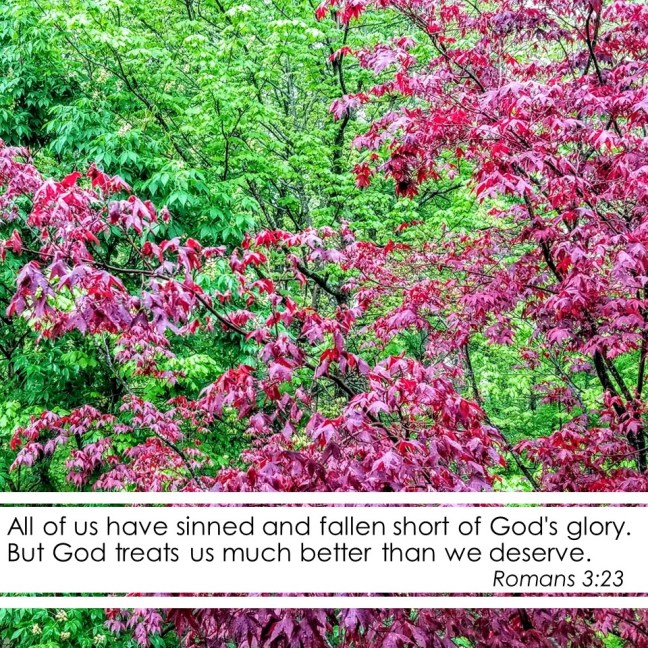
Earlier this year, we took a journey together through the Old Testament book of  Isaiah. Paul, as a learned rabbi and the author of the letter to the church at Rome, quoted regularly from the Prophet. So, let’s take the next few weeks together to look at the New Testament book of Romans. Romans, Chapter 3 introduces us to the beginning of the so-called Romans Road. Paul takes the reader through several stops and outlines the basic plan of salvation. It begins with the definition of the human condition — we are all sinners — and leads us to God’s plan for our salvation through Jesus, the Messiah. Paul first quotes from the Psalmist, who imagines God looking down from heaven upon mankind: “All have turned away, all have become corrupt; there is no one who does good, not even one.” (Psalms 14:3, NIV). In his own words, the Apostle says it this way: “For all have sinned and fall short of the glory of God.” (Romans 3:23, NIV).
Jesus freely accepts us and sets us free from our sins.

On the journey of this pathway to heaven, every single one of us must ultimately make this confession: We are sinners. The word “sin” means to miss the mark, like an archer who’s arrow falls woefully nowhere near his intended target. There is no way that any of us can be as holy as God is holy. Paul is not pointing fingers at other people’s behavior either, for he says about himself in the letter to his pupil Timothy: “Here’s a word you can take to heart and depend on: Jesus Christ came into the world to save sinners. I’m proof—Public Sinner Number One—of someone who could never have made it apart from sheer mercy.” (1 Timothy 1:15, MSG). Our first stop on the Romans Road is your problem and my problem too! We are human beings, created in God’s image, but we are not divine. We will never become God. There is nothing we can do to earn our way into His presence. Yet He is fair; He gives us all a choice: “God treats everyone alike. He accepts people only because they have faith in Jesus Christ. All of us have sinned and fallen short of God’s glory. But God treats us much better than we deserve, and because of Christ Jesus, he freely accepts us and sets us free from our sins.” (Romans 3:22‭-‬24, CEV). We are sinners… But God! Jesus welcomes us all! He sets things right for us. It’s a pure gift, which is undeserved since we are all sinners. But thanks be to God and His grace! HE sets things right! Always! And, indeed, we can be so very thankful! And humbled that He loves us. “God sacrificed Jesus on the altar of the world to clear that world of sin. Having faith in him sets us in the clear.” (Romans 3:25, MSG). Yesterday we talked about “dialing in” to God’s frequency; turning our hearts and ears to intentionally listen to Him and His ways for our lives. Like a child who must crawl before he walks and walk before he runs, it begins with this first step. We must admit to God that even our best actions are flawed. As humans we are sinners. So does this mean we are free to not “do right?”  Paul asks and answers this same question: “Does emphasizing our faith invalidate the law? Absolutely not. Instead, our faith establishes the role the law should rightfully have.” (Romans 3:21, TPT). Some may ask, why? Why is it that none of our best attempts to follow God’s decrees are good enough for God? I believe it’s because it sets Jesus apart for who He is… 100% man and 100% God. He is the only one who never sinned. So, it is only through the recognition of His sacrifice, only through Jesus that we are truly free. (c) 2020. Rich Ronald.

Romans 3. We Were All Going to Drown. But There is Hope.

Earlier this year, we took a journey together through the Old Testament book of  Isaiah. Paul, as a learned rabbi and the author of the letter to the church at Rome, quoted regularly from the Prophet. So, let’s take the next few weeks together to look at the New Testament book of Romans.

Romans 3:1-20.

As the previous Chapter concluded, Paul began to unravel the Law, and make the case that because of Jesus, religion in itself is not where our salvation is found. No, God is truth. And in God alone is our salvation.

“Depend on it: God keeps his word even when the whole world is lying through its teeth. Scripture says the same: “Your words stand fast and true; rejection doesn’t faze you.”” (Romans 3:4, MSG). When the time comes to put God’s promises on trial, they will remain steadfast, from the beginning of time to the end of time.

He’s the one who is faithful even when we’re faithless.  We can trust Him. We can count on Him. He will guide us. He will direct our paths. He will comfort us — even when we’re faithless. And how much more so when we are doing our best to be faithful, seeking after Him with our whole heart! That is amazing, isn’t it? He loves us when we’re in a tight relationship with Him AND when we’re not.

It helps when we earnestly try to listen to Him, right? Remember the old analog days of radio, when you had to turn the dial just a little this way or that to get the signal to come in loud and clear? Some times, hearing God can be that way too. We need to regularly tune in, removing every distraction, to hear Him clearly. So, my encouragement to us all today is to take time to listen and I’m pretty sure we’ll hear. That’s good news!

Keep your hearts tuned into God!

At the same time, we have to remember that we are going to drown in our sin. You are. So am I. And so is everyone you know.  Following the Law won’t help you, either. Even if you could keep all the laws. Which you can’t. 


He’s the one who is faithful even when we’re faithless.


Paul, the accomplished rabbi, knows his Torah. Nine times Paul quotes from the Old Testament.  Nine times we hear that we are all condemned because of our sin. Can you imagine being a Torah following Jew, or even a new believer in Rome (the folks to whom this letter is written), and reading all these discouraging words that Paul quotes here? How did anyone have hope?

“Scripture leaves no doubt about it: There’s nobody living right, not even one, nobody who knows the score, nobody alert for God. They’ve all taken the wrong turn; they’ve all wandered down blind alleys. No one’s living right; I can’t find a single one.” (Romans 3:10-12, MSG).

And this might have been written about people today: “They don’t know how to live in peace. They don’t even fear God.” (Romans 3:17-18, MSG). Paul is quoting from Isaiah 59 and Psalm 36.

I love how Eugene Peterson’s paraphrase draws a sailing analogy:

“And it’s clear enough, isn’t it, that we’re sinners, every one of us, in the same sinking boat with everybody else? Our involvement with God’s revelation doesn’t put us right with God. What it does is force us to face our complicity in everyone else’s sin.” (Romans 3:19-20, MSG).

We’re all destined to drown. That’s a horrific image, isn’t it? Probably one of the worst ways to die. Think about it though, as Jesus spent many of His days around Lake Kinneret, the Sea of Galilee, we see in our mind’s eye images of fishermen-turned-disciples and storms out on the water. I’m reminded of a story in the Gospel of Mark.

“Suddenly a windstorm struck the lake. Waves started splashing into the boat, and it was about to sink. Jesus was in the back of the boat with his head on a pillow, and he was asleep. His disciples woke him and said, “Teacher, don’t you care that we’re about to drown?” Jesus got up and ordered the wind and the waves to be quiet. The wind stopped, and everything was calm.” (Mark 4:37-39, CEV).

Under our own efforts, when we attempt to captain our own ship, when we strive to follow all the rules about living life as a Jesus follower, we will surely drown.  Be assured, however, Jesus offers a Good News lifeline to everyone! He offers calm in our storms. 

Yes, here’s the Good News we’ll read more about tomorrow: “God treats everyone alike. He accepts people only because they have faith in Jesus Christ.” (Romans 3:22, CEV). I’m so thankful for this live-giving hope!


(c) 2020. Rich Ronald.


Romans 2: God is Kind, yet God is Firm.

Earlier this year, we took a journey together through the Old Testament book of  Isaiah. Paul, as a learned rabbi and the author of the letter to the church at Rome, quoted regularly from the Prophet. So, let’s take the next few weeks together to look at the New Testament book of Romans.

Romans 2:1-11.
 
This is the whole essence of our relationship with Father God. He’s kind. But sometimes He has to take us firmly by the hand. I’m reminded about a time when I was a really young child and we were on a family vacation in Washington, D.C. We were waiting to cross a very busy intersection when I darted out into traffic. I’ll never forget how hard my dad grabbed my hand and yanked me away from an oncoming car as its tires screeched. It saved my life!
 
God does that for us. He saves us in spite of ourselves. I believe sometimes He allows obstacles to come into our lives that we might perceive to be everything from speed bumps to twenty-foot tall walls. Do you ever wonder if those stumbling blocks are the result of sin? Might our difficulties be His way of leading us, in kindness, to change what we are doing? Why would He do that?
 

Ultimately, it’s all about radical life change.

“But all who do right will be rewarded with glory, honor, and peace.” (Romans 2:10, CEV).
 
God wants us to enjoy the beautiful rewards of following Him…  glory, honor, and peace. 
 
Ultimately, it’s all about radical life change. Are you willing to live that kind of life? A life that is radically different? A life of total surrender and complete obedience? Radically changed? This might be a great season to engage in self-reflection. What are some habits that you might need to release? What are some new disciplines that would be beneficial? I heard a pastor encourage his flock recently by saying, “When this is over, let’s not go back to normal. That was awful! Let’s look forward to a new normal!”
 
We will take a deeper dive into Romans 12 later in this study. This is how I would define radical life change:
So here’s what I want you to do, God helping you: Take your everyday, ordinary life—your sleeping, eating, going-to-work, and walking-around life—and place it before God as an offering. Embracing what God does for you is the best thing you can do for him. Don’t become so well-adjusted to your culture that you fit into it without even thinking. Instead, fix your attention on God. You’ll be changed from the inside out. Readily recognize what he wants from you, and quickly respond to it. Unlike the culture around you, always dragging you down to its level of immaturity, God brings the best out of you, develops well-formed maturity in you. (Romans 12:1-2, MSG).
 
Let’s all be better in the upcoming season than we’ve been previously. Let’s raise the bar. Can we make a commitment to improving our lives, even if in just one simple way? Radical life change can begin with a small step or a large one.  For example, you don’t have to sign up to run a marathon, but maybe tomorrow you take a walk around the neighborhood for the first time in years? Or you actually read that book on your bedside table? Or you commit to serving or volunteering?
 
Take your hand in His and let Him lead you today. He sees deep in your heart. Let Him bring out the best of you. Let Him develop well-formed maturity in you.
 
 
(c) 2020. Rich Ronald.

Romans 1. Who Are You and What Are You Doing?

Earlier this year, we took a journey together through the Old Testament book of  Isaiah. Paul, as a learned rabbi and the author of the letter to the church at Rome, quoted regularly from the Prophet. So, let’s take the next few weeks together to look at the New Testament book of Romans.
Right off the top, we see that Paul calls himself a “devoted slave on assignment.” (Romans 1:1, MSG). And it immediately causes me to ask myself two questions: 1) Am I a devoted slave? and 2) What is my assignment? We could certainly drop anchor before the ship even leaves the harbor to ponder these two thoughts.

It’s been said that we are all a slave to something or someone. That can be a good thing, right? If we are bound by healthy habits our assignment might be exercising and eating well-balanced meals. On the other hand, if we are controlled by a TV craving, we might binge-watch our favorite situation comedy until the wee hours of the morning, thus negatively altering our work performance the next day.


Jesus is worth following is because He chose us to give us His grace and the eternal life that comes with it.


What if, like Paul, our days were structured around a life disciplined by Jesus? What if we awoke each morning with the inclination on our lips and heart to prioritize God’s to-do list over our own?

Why would Paul do this? Why would we?

“Through him, we received both the generous gift of his life and the urgent task of passing it on to others who receive it by entering into obedient trust in Jesus.” (Romans 1:5, MSG).

Paul assures us that the only reason Jesus is worth following is because He chose us to give us His grace and the eternal life that comes with it. He has chosen us! He has given us grace! He has presented us with life! As we fully embrace this blessing and calling,  might it be relatively easy to accomplish the assignment of telling others about Him?  What if we shared this truth with our friends and family: “You are who you are through this gift and call of Jesus Christ!” (Romans 1:6, MSG).

What a great promise to view through the lens of God’s affection for everyone! You are who you are, I am who I am, through the gift of grace — God’s abundant and unconditional love.

It’s no wonder we see the passion light up Paul’s face as he exclaims:

“And that’s why I can’t wait to get to you in Rome, preaching this wonderful good news of God. It’s news I’m most proud to proclaim, this extraordinary Message of God’s powerful plan to rescue everyone who trusts him, starting with Jews and then right on to everyone else! God’s way of putting people right shows up in the acts of faith, confirming what Scripture has said all along: “The person in right standing before God by trusting him really lives.”” (Romans 1:15-17, MSG).

This Good News is extraordinary! Isn’t it worth sharing? Isn’t it worth structuring our days around and committing our lives to?  While our salvation is not earned by completing our God-given assignments, Paul writes to another church: “God planned for us to do good things and to live as he has always wanted us to live. That’s why he sent Christ to make us what we are.” (Ephesians 2:10, CEV).

May God fill you with His strength and joy and grace today as you seek to serve Him by accomplishing the assignments He has for you.


(c) 2020. Rich Ronald.


Passover Seder for Believers in Yeshua… a Haggadah.

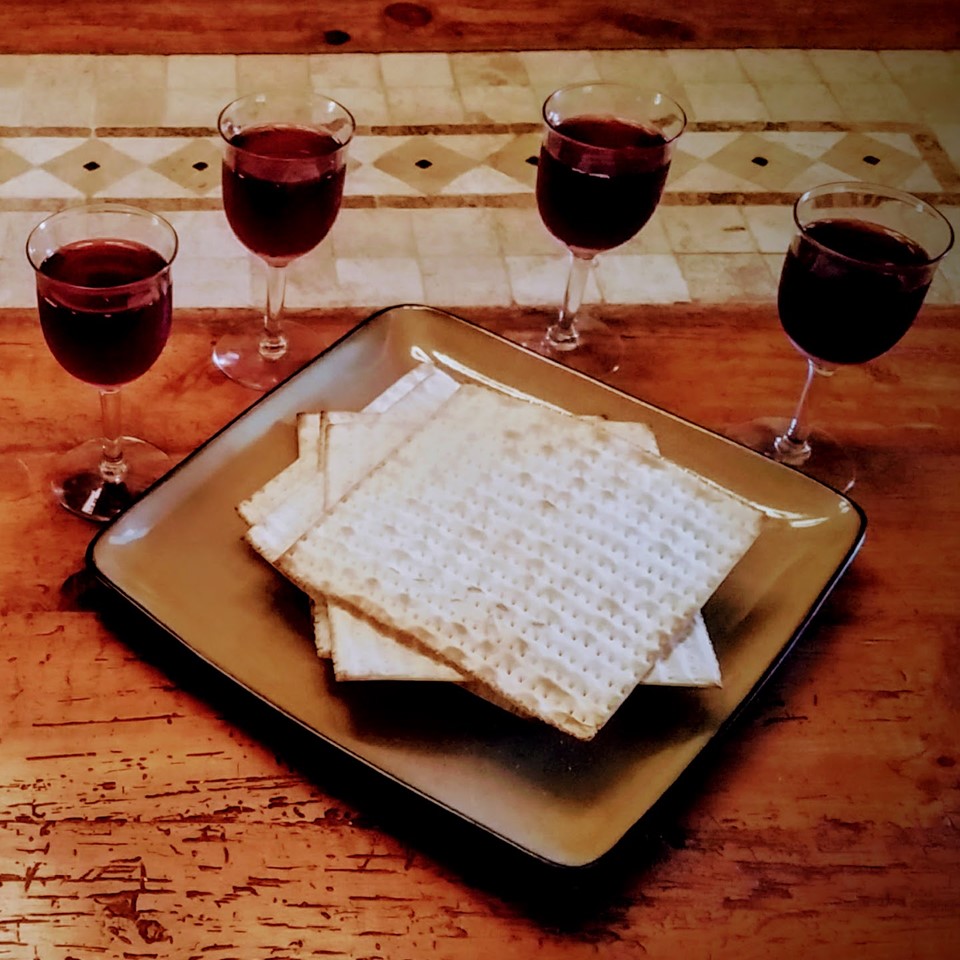
Unleavened bread, or matzah, and four glasses of wine are key symbols used to celebrate Passover.

Passover begins this evening, Wednesday, April 8th. A Passover Seder (pronounced SAY-der) is a meal and celebration that tells the story of the Exodus of the Jewish people from the bondage of Egypt and Pharoah. The Bible’s book of Exodus tells this story.

What follows is a Haggadah — or Story– that affirms Jesus as the Passover Lamb. Some may suggest it is misguided for Christ-followers to celebrate a Jewish holiday such as Passover. But I would say, Jesus is our Messiah. He was a Jew. This meal is likely the “Last Supper” He celebrated with the disciples in the Upper Room. It is very appropriate for believers in Jesus to celebrate the story of the Exodus, as it represents our own story of being in bondage to sin and death and our journey to freedom and life. In the days of Moses, life was given to people of faith by the blood of the lamb painted over the doorposts of houses. Today, we receive life by way of the blood of Jesus “painted” over the doorposts of our hearts.

This Haggadah was originally written for our family twenty years ago, with input from various people including family friends who are Jewish. Note, most of the symbolic items have been a part of the Jewish tradition of Passover for centuries. Many were not a part of the tradition at the time of the “Upper Room” Passover. Our family added the red scarf/red ribbon as a way to visualize the doors of our hearts being painted with the blood of Jesus. Portions have been directly excerpted from the booklet “Passover Seder and Menu for an Observance by Christians” by Barbara Balzac Thompson, published by Augsburg Publishing House, Minneapolis, © 1984.

Passover lasts for eight nights. Feel free to celebrate a Passover Seder any night, not just the first night. Make it work for your family. This is a great opportunity to invite friends and neighbors to join you. This year, because of social distancing, maybe you celebrate via Zoom or Skype.

Before you gather, you’ll need a few key ingredients for your table:

Two candlesticks in candle holders.

Wine or grape juice. You’ll be pouring four glasses for each participant, so be sure to have enough on hand for everyone.

Matzah bread. You’ll need at least three full-sized squares on a separate plate wrapped in a cloth or linen napkin. Plus, you’ll want enough for everyone to enjoy as much as they’d like.

The Seder Plate includes items which we’ll feature throughout the evening, including: a lamb shank (you can get this from the butcher at your local grocery store), a dollop of horseradish, a sprig of parsley, charoset (which is a mixture that includes chopped apples, honey, and cinnamon). You will also need in separate bowls/small plates enough horseradish, parsley, and charoset for everyone to enjoy at least a small taste.

For your table, you’ll need a bowl of fresh water (like a cereal bowl) and a smaller bowl (like a ramekin) of salt water (just enough salt to taste salty, maybe 1/2 teaspoon).

A red ribbon, scarf or piece of yarn, about three-to-four feet in length, for each participant.

You’ll also want to have prepared your main course of the evening meal, and keep it warm in the kitchen. You’ll take the first 30-45 minutes of the evening telling the story.

In most families, the father will read through the narrative. There are times when there is a responsive or group reading as well, so it is helpful for everyone to have their own copy, or a shared copy, of the “script” for the evening. Also, this is a very family-friendly event! Children are encouraged to participate. There is a specific place where they are to ask questions, but if you’d like, feel free to allow them to interrupt with queries and laughter. Our Seder is a time bathed in much grace. Sometimes we recline on the floor (more on that later). One year, we actually roasted a lamb on an open pit in the backyard. We often have coloring pages and snacks available for younger children. Feel free to be creative as you like as you demonstrate your love for God’s plan of redemption in the life of your family.

WELCOME

Welcome in the name of Yeshua, Jesus our Messiah! Tonight we will celebrate Pesach (PAH-sach)… Passover. This is the celebration of the most incredible feast on the Jewish and Christian calendars. It intricately weaves a story of God’s power, faithfulness and love for mankind in both the Old and New Testaments. It was celebrated in the Ancient World, in Jesus’ time, and is still celebrated in traditional Jewish homes today.

The first Passover was not a celebration (see Exodus 12). It was a night of apprehension, fear, and expectation for the beginning of a new journey for the children of Israel. The Bible tells us that the Hebrews were to take the blood of a perfect lamb and paint it on their doorposts. By following this command, the Angel of Death which moved through Egypt that night would “pass over” their homes. But since the Angel of Death did not pass over Pharaoh’s house, and his firstborn son was taken from him, his hardened heart was finally softened and the next morning Pharaoh let the Hebrew slaves go free. This meal that we celebrate tonight, the Seder, is symbolic of the rush to leave Egypt and the bondage it represents.

We also celebrate the significance of Yeshua’s last meal, sometimes called the “Last Supper,” a traditional Passover meal, with His disciples in the Upper Room. There is a lot of symbolism between the Old Covenant meal and the New Covenant meal. We hope you’ll enjoy learning how Yeshua tied the two meals together… and how it is applicable to us all.

Tonight, we tell a story, the Haggadah (hah-gaw-DAH), of how the blood of a lamb saved the people of God in the Ancient times… and still saves today.

John 1:29: The next day, John the Baptizer saw Jesus coming toward him and said, “Look, the Lamb of God, who takes away the sin of the world.”

Reading: Luke 22:7-20. (This can be read by one of the children).

Let us celebrate the Passover together!

Continue reading Passover Seder for Believers in Yeshua… a Haggadah.

Passover Seder for Believers in Yeshua… a Haggadah.

Unleavened bread, or matzah, and four glasses of wine are key symbols used to celebrate Passover.

Passover begins Wednesday evening, April 8th. A Passover Seder (pronounced SAY-der) is a meal and celebration that tells the story of the Exodus of the Jewish people from the bondage of Egypt and Pharoah. The Bible’s book of Exodus tells this story.

What follows is a Haggadah — or Story– that affirms Jesus as the Passover Lamb. Some may suggest it is misguided for Christ-followers to celebrate a Jewish holiday such as Passover. But I would say, Jesus is our Messiah. He was a Jew. This meal is likely the “Last Supper” He celebrated with the disciples in the Upper Room. It is very appropriate for believers in Jesus to celebrate the story of the Exodus, as it represents our own story of being in bondage to sin and death and our journey to freedom and life. In the days of Moses, life was given to people of faith by the blood of the lamb painted over the doorposts of houses. Today, we receive life by way of the blood of Jesus “painted” over the doorposts of our hearts.

This Haggadah was originally written for our family twenty years ago, with input from various people including family friends who are Jewish. Note, most of the symbolic items have been a part of the Jewish tradition of Passover for centuries. Many were not a part of the tradition at the time of the “Upper Room” Passover. Our family added the red scarf/red ribbon as a way to visualize the doors of our hearts being painted with the blood of Jesus. Portions have been directly excerpted from the booklet “Passover Seder and Menu for an Observance by Christians” by Barbara Balzac Thompson, published by Augsburg Publishing House, Minneapolis, © 1984.

Passover lasts for eight nights. Feel free to celebrate a Passover Seder any night, not just the first night. Make it work for your family. This is a great opportunity to invite friends and neighbors to join you. This year, because of social distancing, maybe you celebrate via Zoom or Skype.

Before you gather, you’ll need a few key ingredients for your table:

Wine or grape juice. You’ll be pouring four glasses for each participant, so be sure to have enough on hand for everyone.

Matzah bread. You’ll need at least three full-sized squares on a separate plate wrapped in a cloth or linen napkin. Plus, you’ll want enough for everyone to enjoy as much as they’d like.

The Seder Plate includes items which we’ll feature throughout the evening, including: a lamb shank (you can get this from the butcher at your local grocery store), a dollop of horseradish, a sprig of parsley, charoset (which is a mixture that includes chopped apples, honey, and cinnamon). You will also need in separate bowls/small plates enough horseradish, parsley, and charoset for everyone to enjoy at least a small taste.

For your table, you’ll need a bowl of fresh water (like a cereal bowl) and a smaller bowl (like a ramekin) of salt water (just enough salt to taste salty, maybe 1/2 teaspoon).

A red ribbon, scarf or piece of yarn, about three-to-four feet in length, for each participant.

You’ll also want to have prepared your main course of the evening meal, and keep it warm in the kitchen. You’ll take the first 30-45 minutes of the evening telling the story.

In most families, the father will read through the narrative. There are times when there is a responsive or group reading as well, so it is helpful for everyone to have their own copy, or a shared copy, of the “script” for the evening. Also, this is a very family-friendly event! Children are encouraged to participate. There is a specific place where they are to ask questions, but if you’d like, feel free to allow them to interrupt with queries and laughter. Our Seder is a time bathed in much grace. Sometimes we recline on the floor (more on that later). One year, we actually roasted a lamb on an open pit in the backyard. We often have coloring pages and snacks available for younger children. Feel free to be creative as you like as you demonstrate your love for God’s plan of redemption in the life of your family.

WELCOME

Welcome in the name of Yeshua, Jesus our Messiah! Tonight we will celebrate Pesach (pah-SACH)… Passover. This is the celebration of the most incredible feast on the Jewish and Christian calendars. It intricately weaves a story of God’s power, faithfulness and love for mankind in both the Old and New Testaments. It was celebrated in the Ancient World, in Jesus’ time, and is still celebrated in traditional Jewish homes today.

The first Passover was not a celebration (see Exodus 12). It was a night of apprehension, fear, and expectation for the beginning of a new journey for the children of Israel. The Bible tells us that the Hebrews were to take the blood of a perfect lamb and paint it on their doorposts. By following this command, the Angel of Death which moved through Egypt that night would “pass over” their homes. But since the Angel of Death did not pass over Pharaoh’s house, and his firstborn son was taken from him, his hardened heart was finally softened and the next morning Pharaoh let the Hebrew slaves go free. This meal that we celebrate tonight, the Seder, is symbolic of the rush to leave Egypt and the bondage it represents.

We also celebrate the significance of Yeshua’s last meal, sometimes called the “Last Supper,” a traditional Passover meal, with His disciples in the Upper Room. There is a lot of symbolism between the Old Covenant meal and the New Covenant meal. We hope you’ll enjoy learning how Yeshua tied the two meals together… and how it is applicable to us all.

Tonight, we tell a story, the Haggadah (hah-gaw-DAH), of how the blood of a lamb saved the people of God in the Ancient times… and still saves today.

John 1:29: The next day, John the Baptizer saw Jesus coming toward him and said, “Look, the Lamb of God, who takes away the sin of the world.”

Reading: Luke 22:7-20. (This can be read by one of the children).

Let us celebrate the Passover together!

Continue reading Passover Seder for Believers in Yeshua… a Haggadah.

Death. Then Life. Through The Light.


Whenever I don’t have a chapter book or novel to read, I flip to a selection in Eugene Peterson’s “As Kingfishers Catch Fire.” It’s a collection of one pastor’s encouraging sermons from over 30 years in the pulpit. 

There is a chapter entitled “Father, Glorify Thy Name” which includes many truths. These words articulate Jesus’ shortest prayer, recorded in the Gospel of John: “Father, bring glory to your name.” (John 12:28, NLT).
It may be a short prayer, but it is a powerful prayer. Peterson says praying, for us as it was for Jesus, is like breathing. “If we are to live, we all have to do it… it is woven into the fabric of life.”


I believe this is a season when we will all rise, but only as we first kneel.


Many have found a new voice of prayer during this season. That is wonderful! I even saw a news clip from MSNBC where the host asked his guest, Pastor T.D. Jakes, to offer a prayer for the Nation. I was a TV news anchor and reporter at one time and under “normal” circumstances that would never happen. Yet here we are! For 30 seconds as the pastor prayed, news anchor Craig Melvin bowed his head and affirmed the petition with his own “Amen.” Isn’t that encouraging? God is gracious. Many are lifting an eye towards heaven and seeking God’s peace, His calm, His healing, His protection. Keep it up! Thank you for breathing. Thank you for praying.

I believe this is a season when we will all rise, but only as we first kneel. I can’t help but recall an often quoted scripture from the Old Testament: “If my people, who are called by my name, will humble themselves and pray and seek my face and turn from their wicked ways, then I will hear from heaven, and I will forgive their sin and will heal their land.” (2 Chronicles 7:14, NIV).

And the glory of God? Paradoxically, it’s not more. It’s less. Peterson says Jesus redefines glory. “The glory with which Jesus is glorified is not inspirational… It is not glamorous.” It is not a beautiful sunrise, although through our eyes it is. No, in God’s eyes, it is first an agonizing cross. “Obscurity, rejection, a sacrificial life, an obedient death.”

Seeds must die and be buried before there is new life. It might be said that the world is dying right now. There is irony in seeing gorgeous spring cherry blossoms and daffodils and redbuds in full bloom as we suffer through a physical, virus-driven fall and winter for humankind. Yet there will be a morning when our life will spring forth again! We can trust the Creator to be glorified in the new life that always follows death.

Peterson notes that the Son must die so that the Son, and the Father, and the Spirit, are glorified. Will you join me in earnestly praying that we will all see the Glory of God during this season?  Jesus describes it this way:

“Listen carefully: Unless a grain of wheat is buried in the ground, dead to the world, it is never any more than a grain of wheat. But if it is buried, it sprouts and reproduces itself many times over. In the same way, anyone who holds on to life just as it is destroys that life. But if you let it go, reckless in your love, you’ll have it forever, real and eternal.” (John 12:24‭-‬25, MSG).

We are to let go of our life – we are to die – so that we might save it and live.

Jesus’ final words in this scene? “My light will shine for you just a little longer. Walk in the light while you can, so the darkness will not overtake you. Those who walk in the darkness cannot see where they are going. Put your trust in the light while there is still time; then you will become children of the light.” (John 12:35‭, NLT)

We can trust the Light to shine. We can! Light is key in the cycle of death to germination to regeneration to birth. In the Light, we will all find life.

One final note on the importance of light, from the book of Revelation where John describes heaven: “The City doesn’t need sun or moon for light. God’s Glory is its light, the Lamb its lamp!” (Revelation 21:23, MSG).

A simple, yet powerful prayer for this season? “Shine on, Jesus! Shine!”


(c) 2020. Rich Ronald.

_____

As Kingfishers Catch Fire, by Eugene H. Peterson, (c) 2017, WaterBrook.